Module 7

Meta ads in practice

12 lessons, 44 stepsOne instruction at a time, each with the result to expect. Tick steps as you go; Helix remembers.

Outcome: you can build and run a Meta (Facebook and Instagram) ad account in about 10 minutes a day, and spend more without breaking what works.

Related SOPs: 05 Meta structure and scaling, 06 Meta daily optimisation, 07 Creative testing

In plain words

Stage: Attract (get seen by people who want what you sell). Every lesson below is tagged with its stage; see Attract, Convert, Grow.

What it is: How to set up and run Facebook and Instagram ads in about 10 minutes a day.

Why it matters: For most stores, Meta is where most new customers come from. Doing the basics well beats clever tricks.

Do this:

  1. Set up your pixel so Meta can see sales.
  2. Start one Sales campaign with broad targeting and 3 ads.
  3. Each day, check cost per sale against your target and act on the plain-English verdict in Helix.

Words to know:

  • Pixel: A small piece of code on your store that tells Meta when someone views, adds to cart or buys.
  • Advantage+: Meta's automatic settings that let its system choose audience, placements or budget for you.
  • Learning phase: The first days after you start or change an ad set, while Meta works out who to show it to. Results jump around, so wait.
  • CPA: Cost per acquisition: how much ad money it took to get one sale.

All words are explained in the glossary.

Lesson 7.1: Account setup checklistAttract

Why this matters

Ten minutes of setup before you spend money prevents the most expensive Meta problems: lost sales tracking, hacked accounts and runaway spend. Do this once, tick each step, and check it again every quarter.

0 of 8 steps done

Step 1 of 8

In Meta Business Settings (business.facebook.com/settings) go to Security Centre, start business verification, add a second admin under Users > People, and turn on two-factor authentication (a code from your phone as well as a password) for every admin.

Expected result

Security Centre shows verification started or done, two admins, and two-factor on for both.

Watch out

One admin is a single point of failure. If that person is locked out or hacked, you lose the account.

Lesson 7.2: Automated vs manual campaignsAttract

Why this matters

Meta offers two ways to run campaigns. Automated (Advantage+) campaigns let Meta choose budget split, audience and placements; manual campaigns let you control audience, exclusions and placements. Most accounts use both, each for what it does best.

0 of 3 steps done

Step 1 of 3

Use an automated (Advantage+) Sales campaign for broad cold and mixed audiences.

Expected result

Your main prospecting campaign is automated.

Lesson 7.3: Ad formatsAttract

Why this matters

The format is the shape of the ad: video, image, carousel and more. Each format suits a different job, and the wrong one can hide a good message.

0 of 3 steps done

Step 1 of 3

For each ad in your next batch, pick the format from the table below that matches its job (for example single video in 9:16 and 4:5 for most cold ads).

Expected result

Every brief names one format.

Good to know

Format Best for
Single video (9:16 tall and 4:5) Most ads aimed at new people
Single image (4:5) Bold statements, offers, reviews
Carousel (swipeable cards) Several products, steps or reasons
Catalog ads (dynamic product ads) Showing people products they looked at; big product ranges
Collection A shopping experience on mobile
Partnership ads A creator's video run from the creator's own account
Catalog product video Product videos made automatically from templates

Lesson 7.4: LaunchingAttract

Why this matters

How you launch decides how fairly ads are tested and whether they keep their likes and comments. Building once, copying with the same post and launching in batches gives every ad a fair start.

0 of 4 steps done

Step 1 of 4

In your build campaign (always switched off), create the new ads.

Expected result

New ads sit in the paused build campaign.

Good to know

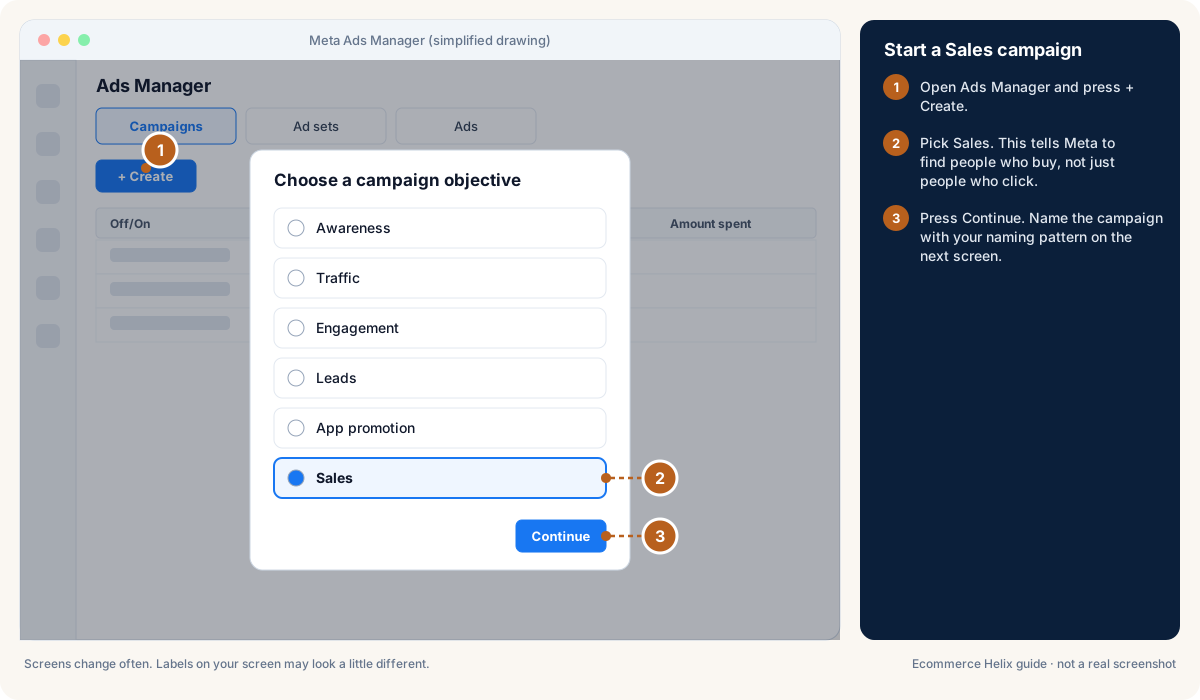
Start a Sales campaign in Meta Ads Manager

Drawing, not a real screenshot. Labels on your screen may look a little different. Official help: Meta: create a campaign in Ads Manager

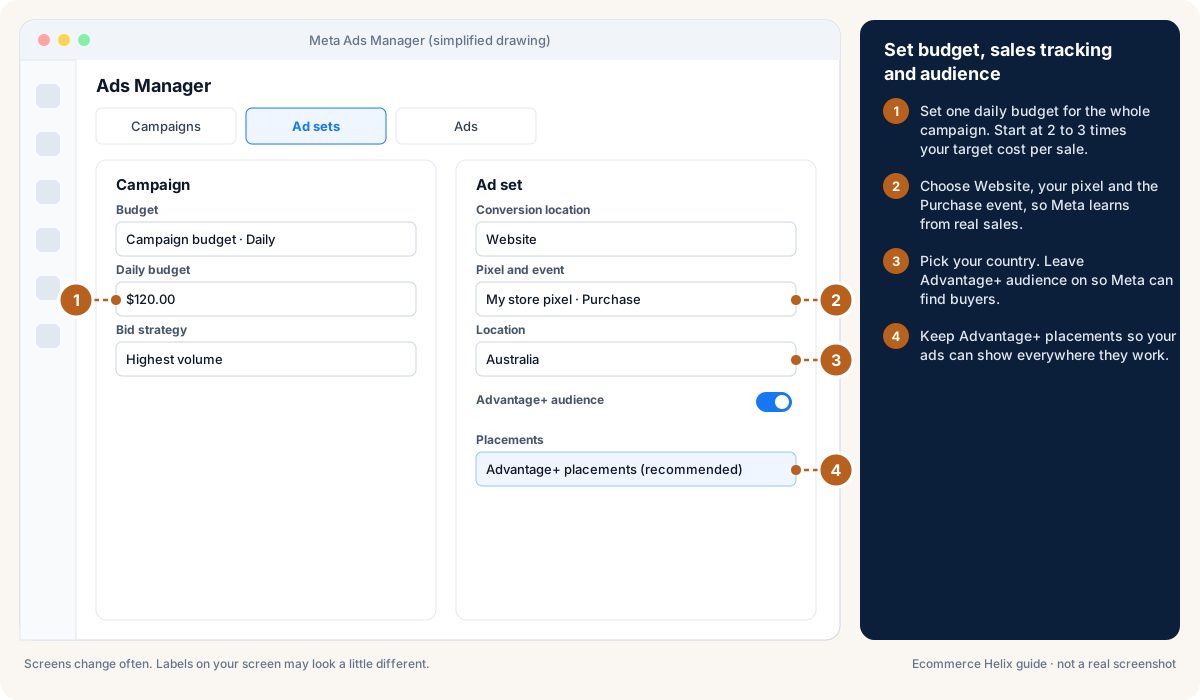
Set budget, sales tracking and audience

Drawing, not a real screenshot. Labels on your screen may look a little different.

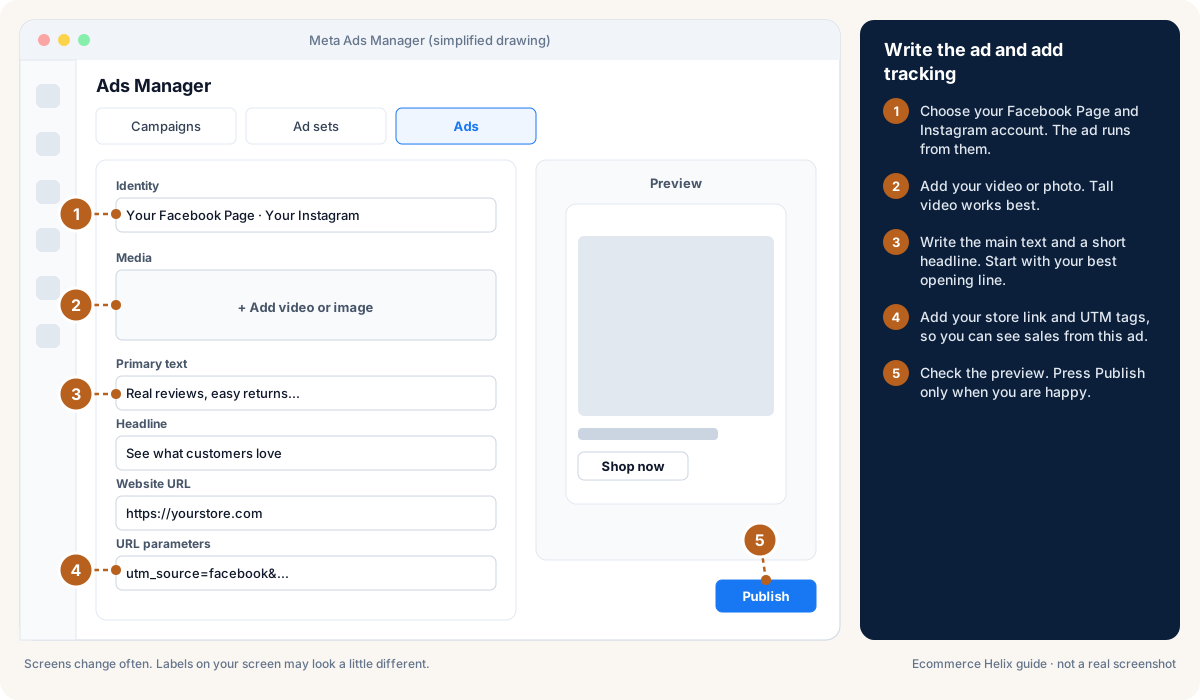
Write the ad and add tracking

Drawing, not a real screenshot. Labels on your screen may look a little different.

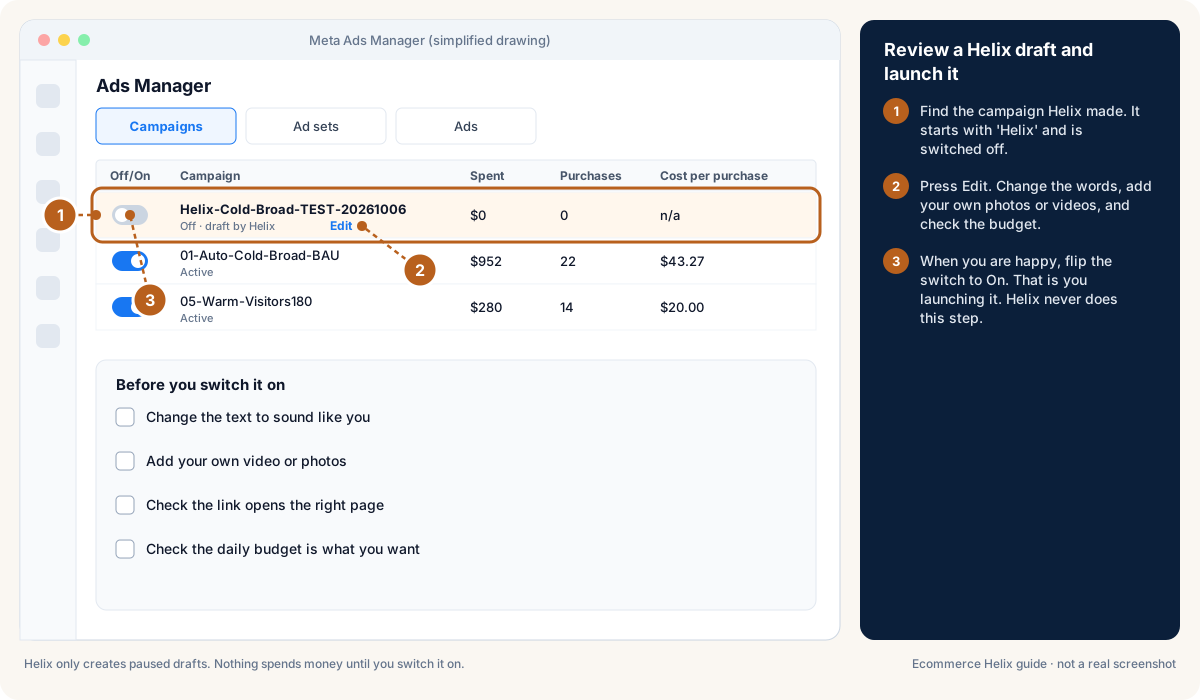
Review a Helix draft and launch it

Drawing, not a real screenshot. Labels on your screen may look a little different.

Lesson 7.5: The learning phaseAttract

Why this matters

The learning phase is the first days after you start or change an ad set, while Meta works out who to show it to. Results are unstable during learning, so knowing what resets it saves you from breaking good campaigns.

0 of 3 steps done

Step 1 of 3

Before editing a live ad set, check whether the edit restarts learning: swapping or adding ads, changing the audience, or changing budget by more than 20%.

Expected result

You only make big edits on purpose.

Lesson 7.6: Daily optimisation in 10 minutesAttract

Why this matters

Ten minutes a day keeps Meta healthy. Five steps in the same order every day turn a confusing dashboard into one clear action. In Helix, Your ads shows the verdicts for you.

0 of 5 steps done

Step 1 of 5

Set your stance from your scorecard: push, careful push, hold or defend (Lesson 1.6).

Expected result

You have one word for today.

Enter your numbers

Lesson 7.7: Reach potentialAttract

Why this matters

Reach potential is how many people an ad can reach before the same people see it twice on average (a frequency of 2). An ad with a tiny reach cannot grow, even if its cost per sale is great.

0 of 3 steps done

Step 1 of 3

In Ads Manager add Reach and Frequency columns and sort ads by reach over the last 7 days.

Expected result

You can see which ads reach many people and which reach few.

Lesson 7.8: Managing expensive cold campaignsAttract

Why this matters

Cold campaigns aimed at new people always look expensive, because Meta misses many sales they cause when people buy days later another way. Judging them wrongly leads to cutting the campaigns that feed the whole store.

0 of 3 steps done

Step 1 of 3

Compare cold campaigns only with other cold campaigns, never with warm ones.

Expected result

Your cold campaigns are ranked against each other.

Lesson 7.9: Metrics by funnel layerAttract

Why this matters

The funnel layer is how well the audience knows you: cold, mixed, warm or hot. Each layer has its own numbers to watch and its own allowance for cost per sale.

0 of 2 steps done

Step 1 of 2

Label each campaign with its layer using the naming pattern from Lesson 6.7.

Expected result

Every campaign name shows Cold, Mixed, Warm or Hot.

Good to know

Layer Who Main numbers to watch
Cold Never heard of you Reach, CPM, hook rate, outbound CTR, share of new customers, cost per sale compared with 2 times target
Mixed Cold and warm together Cost per sale compared with 1.25 times target, frequency, share who engaged
Warm Visited or engaged Cost per sale compared with target, frequency
Hot Added to cart or started checkout Cost per sale compared with 0.75 times target, frequency

Lesson 7.10: Scaling challengeGrow

Why this matters

A scaling challenge is a planned 2 to 4 week push to spend more. Done with new ads ready and a loss limit set, even a failed challenge teaches you what is holding you back.

0 of 5 steps done

Step 1 of 5

Prepare 6 to 10 new ads before you start.

Expected result

Fresh ads are ready to add as frequency rises.

Lesson 7.11: Attribution settingsAttract

Why this matters

Attribution is how a platform decides which ad gets credit for a sale. Meta's default (for example 7 days after a click and 1 day after a view) is not the full truth, so you need a cross-check.

0 of 3 steps done

Step 1 of 3

In Ads Manager click Columns > Compare attribution settings and look at the incremental option where it is available (it tries to count only sales the ad truly caused).

Expected result

You can see how much of Meta's reported sales are likely extra sales.

Lesson 7.12: TroubleshootingAttract

Why this matters

Meta throws up a handful of common problems, from ads that will not spend to strange labels. Each has a known fix.

0 of 2 steps done

Step 1 of 2

Find your problem in the table below.

Expected result

You have the matching fix.

Good to know

Problem What to check
Ads only spend part of the budget Budget too low for the audience, billing problems, policy limits, the schedule
Ads stuck "in processing" Policy review or catalog errors. Wait 24 to 48 hours, then copy the ad and try again.
Meta adds a discount label you did not set Promotions settings in the ad. Turn off automatic offers.
"Data restrictions applied" Meta has put your store in a sensitive category. Ask for a review.
Instagram sells worse than Facebook Usually fine. Judge both together. Only remove a placement with strong proof.
You reached the limit on ads Archive dead ads. Combine ad sets.

Self-check

  1. Name two edits that restart learning.
  2. Why can an ad with a low cost per sale be a poor choice for scaling?
  3. How should you judge cold campaigns?
  4. What do you do if a campaign was hacked?
Answers
  1. Any two of: a budget change over 20%, adding or swapping ads, changing the audience.
  2. It reaches few people before the same people see it again and again.
  3. Against other cold campaigns, and by your total MER and new-customer trend.
  4. Turn it off, remove unknown access, secure the admin logins, contact Meta support and dispute the charges.

Words to know in this module

Creative
The ad itself: the picture or video plus the words.
Pixel
A small piece of code on your store that tells Meta when someone views, adds to cart or buys.
Campaign
The top level in an ad account. It holds the goal, like getting sales.
Broad targeting
Letting Meta find buyers with few or no audience limits. Works best with strong ads.
CPA
Cost per acquisition: how much ad money it took to get one sale.
Advantage+
Meta's automatic settings that let its system choose audience, placements or budget for you.
Learning phase
The first days after you start or change an ad set, while Meta works out who to show it to. Results jump around, so wait.
Ad set
The middle level in Meta. It holds who sees the ads, where, and often the budget.
Two-factor authentication
A second check, like a code from an app, needed to log in. It stops most account takeovers.
Server events
Sales sent to Meta straight from your store's server, so fewer sales go untracked.
Custom audience
A list Meta builds from your own data, like site visitors or customers.
Chargeback
When a customer asks their bank to reverse a card payment. The bank takes the money back until you prove the sale.
Cold audience
People who have never heard of you.
Partnership ad
An ad that runs from a creator's own account, so people see their name instead of yours.
All words to know